
Unidirectional and bidirectional analyzer interfacing explained
Understand the direction of data flow between laboratory analyzers and a LIMS, then review compatibility, test-code mapping and exception handling.
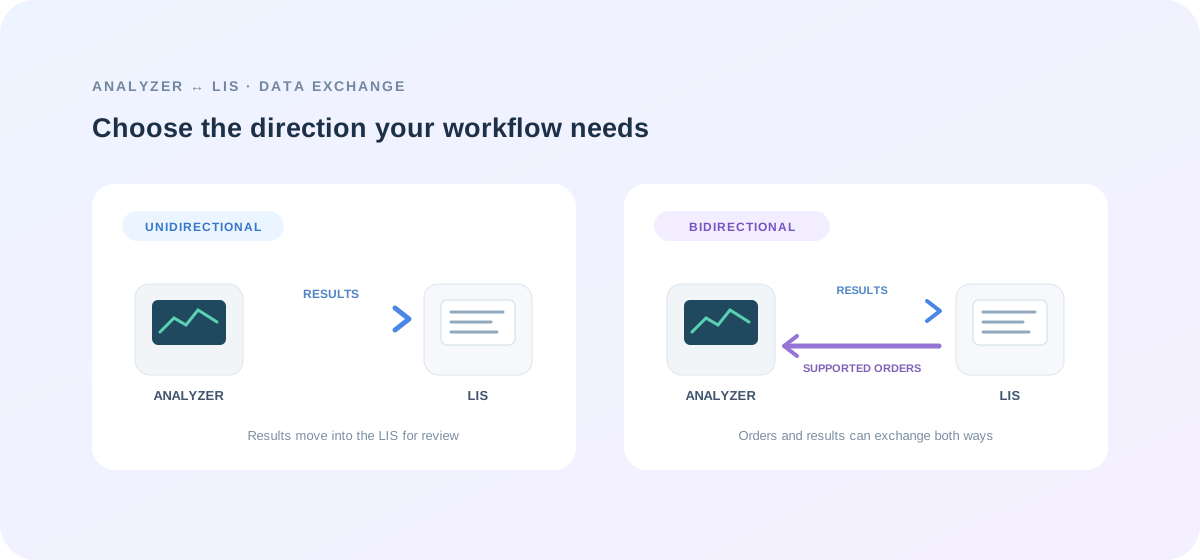
Analyzer interfacing moves data between laboratory instruments and a LIMS. In a unidirectional setup, results generally travel from the analyzer into the LIMS. In a bidirectional setup, the LIMS can also send supported orders or sample details to the analyzer.
Confirm compatibility before connecting
Ask which instrument models and communication protocols are supported, what information moves in each direction, how test codes are mapped, and how the system handles duplicate, delayed or rejected messages. Agree how staff can identify exceptions and reconcile results before release.
Interfacing details vary by analyzer, configuration and protocol. Have the lab and vendor review the intended query and result exchange with the instrument supplier before implementation.